
Category Archives: Advertising

Applemania

Applemania1Look for a cool Apple sign in any prominent location. Follow it and you will enter a glass clad store with a big trendy posters on the walls and series of Macs, iPods and other Apple products. But one special thing to notice there is it looks more like a hangout place or a cyber cafe than a store. What you will see is lots of people standing around surfing the Web and playing with Apple products and accessories.
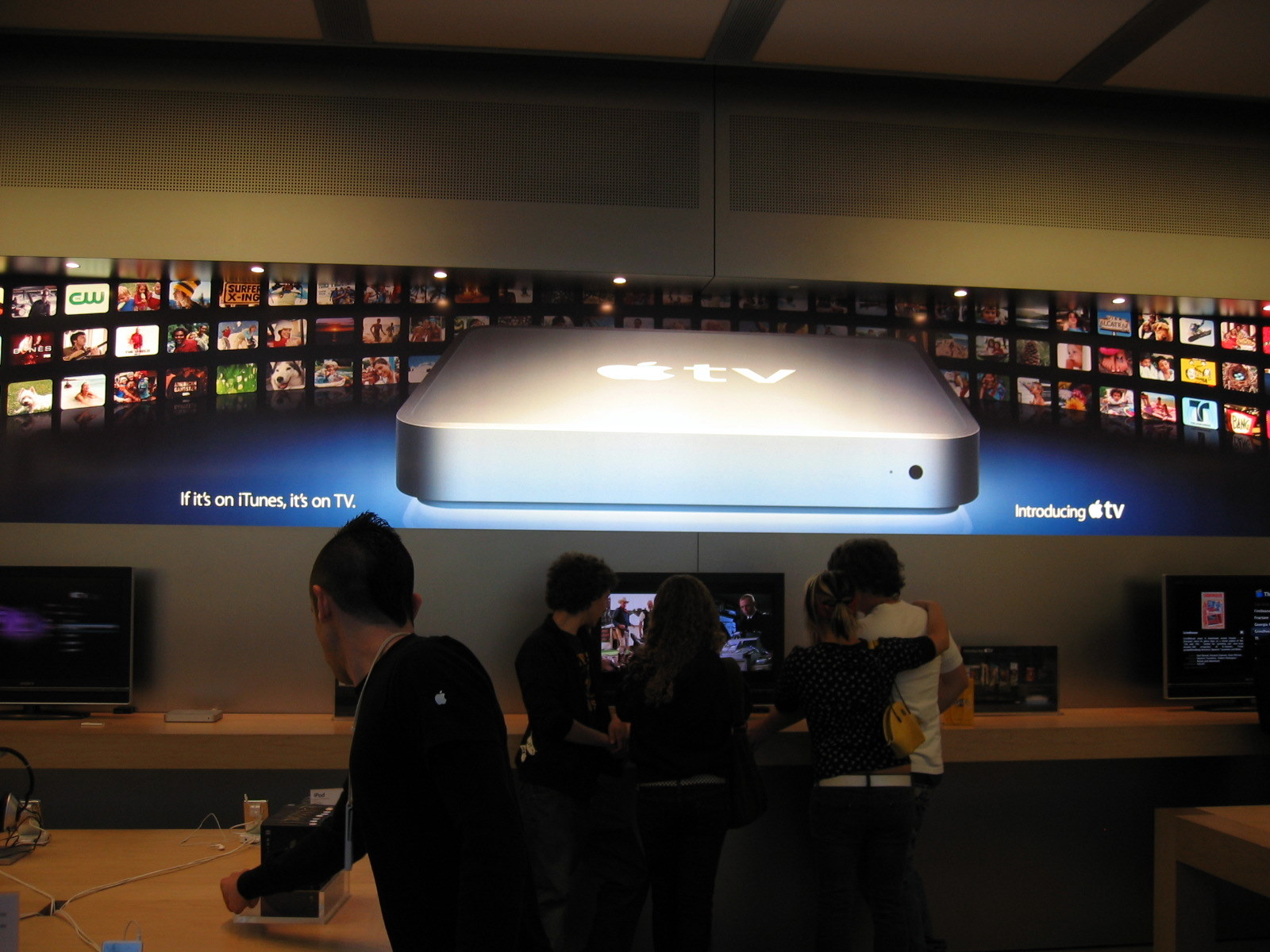
Applemania3So what is Apple trying to do with these stores? Retail sales of iPods or Macs is certainly not the primary objective of these stores. Let alone primary, I think its not even the secondary objective (in fact when I was taking to a sales person about an iPod, she told me that I might want to think about buying it online, because then I can get a personal message engraved on the back of it). The primary objective is to maintain a cool brand image that Apple is well known for. Secondary objective is to let people use the Macs and other Apple products and let them know that there is another alternative available for them. And then if the store sells products and accessories, great!

Applemania2First of all, its worth admiring the artistic architecture of these stores. They look more like museums than stores. The one in New York on the fifth avenue is truely mesmerizing. Next thing to notice is the relaxed and calmed atmosphere in the stores. Customers are made to feel at home and they get close to home like experience while playing with the products. This is really a great strategy. People who are so used to using Personal Computers get exposed to Mac as an alternative and all the i list of products that work only with it.

Applemania5Another way Apple is marketing Mac and the bundled software at these stores is by arranging free training sessions (this is something I experienced in New York). Everyday they have guests from different fields varying from film editors talking about iMovies to web site designer giving a demo of how to use iWeb. By doing this, Apple is trying to create a thought process in minds of customers that anything cool they want to do on a computer can be done using a Mac.

Applemania7An interesting way to look at these Apple stores is to look at them as really expensive billboards on busy streets. Billboards that talk to the customers, let them get in and experience the products and educate them on how to use the products. Billboards that are updated regularly to expose the new products and create buzz about the forthcoming products.

Travel in metros, take a walk down any public park or just wander on busy streets, you will see one thing in common, every third person will be listening to an iPod. And this is not specific to a certain city, the same thing is happening everywhere. iPod has created a confidence in customers for Apple products. Now Apple is exposing the same customers to other products. If Apple gets the price equation straight for its products, it won’t be surprising to see them creating Applemania in other markets as well.

Spinning the Web with Spider-Man 3

Spider-Man 3 trailers aired by Sony Pictures were squarely out-numbered by Spider-Man 3 based promotions run by other companies. Tune in to any television channel and you will run into ads from Comcast, Trix and Kraft featuring Spider-Man 3. Turn on the radio and 7-Eleven spot will catch your attention. Go to Burger King or Walmart, and you will see the Spider-Man 3 promotions going on there. Walk down the Times Square, and you will see large Spider-Man sculptures in Virgin Store, Toys R Us and M&M World welcoming you in the stores.

Spider-Man 3 is a great example of network marketing at its very best. The movie that broke World box office record in its opening week partnered with about a dozen companies for promotion. Comcast, 7-Eleven, General Mills, Kraft, Walmart, Burger King, Toys R Us and others ran Spider-Man 3 advertisements. In fact, just General Mills, Kraft, Burger King and Comcast spent a cumilative of $100 million airing custom spots, many of which produced in-house at Sony Pictures with the help of the studio. Sony Pictures leveraged the brand name of Spider-Man extensively to make the most of the third addition of the Spidey movies.

This prompts a question that out of hundreds of movies coming out every year, why do advertisers jump onto a select few to spend millions? I think among other things, it depends on how well the movie is branded. The Spider-Man brand has a lot of good things going for it. Firstly, the brand got a solid establishment from the first two Spidey movies. Secondly, the universal appeal of the Spider-Man to everyone from a kid to an adult adds to the scope of branding. Another very important thing about the movie, which pulled in a lot of partners, is the creative concept of a simple person gaining extraordinary powers by donning a mask. This gives an “aspirational” value to the movie. The partner companies were able to target their customers by interpreting this value within their own World.

To create a successful partner network, the central entity should have enough meat that can be shared with all the partners. Thats so much true with Spider-Man 3. Spider-Man theme gives a lot of space for partners to evolve it and grow it in their own Worlds. Like Activision, another partner of Sony Pictures, is coming up with a Spider-Man 3 video game late in the year. Burger King developed a scratch-and-win game in which customer choose to reveal what’s behind their red-and-blue or black spidey, with a 50% chance of winning a prize everytime they play. The prize list includes some top prizes worth a million dollars making it even more attractive. Burger King also designed a kids meal promotion with 10 different Spider-Man theme toys to attract kids. Mass retailers like Walmart and Target have interesting activities related to Spider-Man World to attract customers to their stores. 

All these partnerships gave scope to the partners to attract customers with the help of the blockbuster movie. One deal that worked really well for Sony Pictures is the partnership with Comcast as a media partner. Sony studio lacking the TV network to promote the movie, hooked up with Comcast to do that for them. Comcast being the largest cable television provider in US came up with a special on-demand channel featuring exclusive Spider-Man 3 content and increasing the excitment for the movie. Along with this, it also kick-started the buzz for what is said to be the forth and final addition of the Spidey movies with an exclusive trailer. 

One of the most important things in order to do the integrated marketing correctly is the choice of right partners, and looking at these examples, Sony Pictures should be given full credit for doing a wonderful job in that space. All this brought together makes Spider-Man 3 a perfect example of integrated marketing efforts, and another example to show the overall power of integration!

The Times Square Magic

Neon lights, classic advertisements and mesmerizing retail stores – that’s Times Square in a nutshell. No wonder it’s the World’s biggest tourist attraction. I think there is no place in the World that brings together Advertising, Marketing and Technology in a way better than Times Square (Adscovery being an exception;-)). Some cool facts about the Times Square – It accounts for about 0.1% of New York City’s area, but accounts for 5% of city’s jobs and 10% of city’s economic output. The total economic output of $53 billion is more than the combined GDP of Bolivia and Panama.

With more than 40 million people visiting the place every year, what better place out there to advertise than Times Square? Annually aroung 1000+ hours of broadcasting are made from the Times Square. But in an industry where the cost is directly proportional to the number of eyeballs, marketers have to dig deep in there pockets to advertise on the Times Square. The CPMs here ranges from $2 to $5 (prime time TV CPMs are around $20). Advertisements are like the life blood of Times Square, both in terms of economic returns and making the place glow. The return of these advertisements for the marketers has grown exponentially with the advent of social networking and sharing websites like YouTube, Flickr and MySpace. People love to take pictures and videos of these advertisements and share it on these websites increasing the number of views by a large factor. 

Another major attraction on Times Square are the stores. The amount of creativity that goes in these stores is unparallel to any retailing experience in the World. From sugar rush stores of Hershey’s and M&M to kid’s paradise at Toys R Us to Virgin and MTV stores, Times Square has got it all. These stores do a great job of brand uplifting for these brands. Even if people don’t end up buying products at that perticular moment from a store, it leaves a lasting impression creating a strong brand equity. I won’t even classify these stores as just retail stores. They are infact highly interactive billboards. A billboard that communicates a message to the customers and invites them to experince the brand. Take for example the Virgin megastore. It has around 600 listening posts and 100 video posts in the store. Then there is the M&M World where literally walls and walls of M&M in different colors, sizes and shapes are there to entertain the “visitors”.

Times Square doesn’t end with billboards and stores. Add to the mix the theatres on the Broadway, skyscraping hotels, NASDAQ stock market and a couple of music shows in a year right there at the Square, and you can imagine the complete picture. Kudos to the City of New York for maintaining the place and all the marketers, advertisers and designers who put so much brain and energy to each and every square foot on the Times Square to make it a magical experience.

Brand New York City

New York City has a unique feel of its own. Be it the Financial District or the Time Square, the Grand Central or the Central Park, the Little Italy or the Chinatown, every part of the city adds a unique value to its brand. No city in the World comes close to the way New York markets itself. The fast moving Subways, the New York Stock Exchange, the Lady Liberty, the Broadways and the exotic shopping complexes, New York’s got it all to mesmerize anyone and everyone. 

When it comes to brand development, I think NYC does it in a way that can teach even the biggest corporations a lesson or two. The city exploits every channel to showcase itself as the place to be. It attracts everyone towards it. Seinfeld to Saturday Night Live creates a great scene to display the life in New York. The NYSE showcases the financial opportunities in the city, Broadway and studios call upon the artists, and what better place to attract the marketers and advertisers than the Times Square?

The city of New York has put great efforts in order to uplift the brand image. Taking drastic measures to reduce the crime in the city and spending millions to keep subways at par with the rail system anywhere in the World are just to name a couple. And speaking of brand development, how can someone not mention the I Love New York campaign? I think the campaign is far above and beyond any other campaign of its sorts. Now running for about 3 decades (it was started by the New York State Department of Economic Development in 1977), it promotes the metropolitian pride of the New York City.

The brand NYC also does a great job connecting with its customers. If you think of each visitor to the city as a customer, the city does a great job of involving them in it. Two days in the city and you no longer feel like an outsider. Stretch your legs down the crowded streets, catch a few subways or have a meal in one of those New York delis, you will instantaneously get a feel of being a part of the great city.  

People are the most important assets of any company. Same is true with New York. New Yorkers form the blood flowing in the veins of NYC. People living the fast paced life of New York, moving along with the city in every New York minute and welcoming outsiders to the city adds tremendous value to the brand.

The great thing about the New York City’s brand promotion is that it so beautifully hides the miseries of the city while creating the bright picture. Despite the traces of crime and poverty, like a perfect advertiser, New York keeps attracting more and more people towards itself and keep adding to the brand equity. Now what will be really exciting to do here is a brand extension of NYC to perhaps other cities in the US and around the Globe!

Applying the water theory elsewhere

I love the World of the water marketing (please don’t stop reading the post categorizing this to be another display of my obsession with water…I have a point here). We can adopt the principles of water marketing successfully in many diverse industries. Also, correlating the water industry with other industries might justify some buying decisions made by the customers, and some pricing decisions made by the sellers.

One of the uniqueness of water marketing is that marketers are trying to sell something that is otherwise freely available. So they make the product attractive enough for customers to pay for it. This draws great parallels with the software industry. There is tons of open source software out there, from operating system to a word processor, which are freely available. But still people pay for proprietary software. I think just like bottled water, software companies are better able to present their software to the customers and win their faith that makes them buy their products rather than going for the free ones out there.

Customers find themselves more secure while consuming a product that has an owner selling it to them. This puts spotlight on another characteristic of the water marketing. Water marketing is one of the best examples to prove that security sells. One of the primary reasons anyone buys bottled water instead of consuming tap water is their belief that bottled water is more pure and safe to consume. In the same way, any company can increase the value of their product by adding the security dimension to it. Every industry from automobile to housing to mutual funds has a security feature that adds to the value of the product. So security sells better than any add-on and should be leveraged with proper planning.

Time and again we have seen that localization is the key to marketing on the global platform. Marketers selling the same product in different geographies need to take into account what appeals to people in those geographies in order to market the product effectively. Water marketing adds more weight to this. Just like water is sold in different parts of the World with different messages and taglines, varying from beauty to safety, in order to market any product in different geographies, the message associated with it needs to be customized.

The diverse World of water marketing also shows the importance of market placement. Companies like Evian and Fiji water end up at one end of the spectrum charging multiple times the price charged by any other company. They have placed themselves in the market with great precision making their brand and product elite while competing with the cola giants and the local brands. This draws great parallel with iPod placement in the personal music player industry or BMW placement in the auto industry. This kind of market placement shows how a company can charge premium by a distinctive placement of its brand and products.

Creativity has no limits. If you think that you are in a dull industry with not enough space for applying creativity, take a look here. There cannot be anything that can be more dull than water. It’s not the product that is dull or exciting, it’s the marketing efforts put behind it that makes it dull or exciting. Don’t sell just the product; bundle it with a promise and see the wonders.

Tagline: it’s not just a catchy phrase

One of the most important things that define a brand is its tagline. It’s a statement that defines the company’s mission. Companies put immense passion and efforts in coming up with a few words that can define their existence. A successful tagline is something that really appeals to the target customers. Tagline is the most important ad a company will ever create and the most extensive marketing campaign they will ever launch, because it is the only thing that can become synonymous with the name and logo of the company.

Speaking of taglines, the first one that comes to my mind is the legendary Nike tagline – Just Do It. Just Do It has done wonders for Nike over more than a couple of decades now. Nike has an amazing marketing team that continue to find new and amazing ways to say it repetitively to the customer without letting them get fed-up of it. The universal tagline finds ways and methods to adapt to different parts of the World. Just Do It is owned by the customers everywhere and customers love it.

One of the taglines from more recent times that created waves is the eBay tagline: Whatever it is…find it at eBay. eBay connects directly with its customers using this message and when the customers go out shopping, they know that whatever they are looking for, there is always an option to find it at eBay. eBay has taken the tagline to another level by adding bells and whistles to the “it” factor by creating their ads around “it” and adding features to their website showcasing the “it” of the week, day etc.

Then there is Avis: We are number 2: so we try harder. This is also one of those taglines that communicate a lot about the brand. It tells the customers why they should go for Avis (because they try harder) and the passion and energy Avis is putting in the brand acknowledging the fact that they are not number uno. That makes you think what will Avis do when and if they become number 1?

This leads to a very interesting topic of revival of tagline. Tagline needs to revive with time. A company should make sure the tagline is not out-dated, different factors like competition, market dynamics etc. are taken into account and customers are able to connect to it. Coca cola is a perfect example of how a tagline is revived over decades. Coca cola started with “the real thing” in 1970s and with several iterations through the years (Coke adds life, have a Coke and smile, always coca cola, and so on) came up with “Can’t beat the real thing” in 1990s. 

But it is important to remember that although it is not “just” a catchy phrase, it should be after all a catchphrase. Something your customers can connect to, something that they can remember while making a buying decision and something that can guide them distinguish you from your competitors. What heights can a tagline take a company? Well it has the potential of becoming part of the everyday lives of your customers. When people start replacing the tagline with your company’s name in their daily chats, you can figure out that you have got a winner. So be it the Nike attitude or trying harder than Avis, tagline has the force of making a brand stand out above the rest.

Blend in advertising

Entertainment in today’s World comes with an array of options. Hundreds of television channels, tens of radio channels, many newspapers and magazines, and zillions of websites on the Internet. This range of options is a blessing and a curse for the advertising World. Blessing, because it provides advertisers with options to target the right segment of customers. Every dollar spent on promoting a product can be spent with the right customer in mind. But on the other hand, it’s getting harder and harder to make the target audience wait and see the advertisements. That’s a big challenge which is going to increase every day. One thing that may increase the chances of people watching the ads is by blending them with the content of the medium.

Advertisers are paying special attention to make sure they are targeting the right segment of audience. Advanced software are developed to make sure the relevance and reach of advertisement maps to the target audience. This has increased the effectiveness of advertisement a lot. But merely placing the advertisement at the right spot does not guarantee a couple of things. First, the advertisement will be noticed, or even that it will be watched by the target audience. For mediums like television and radio, the customer might flip the channel and for mediums like newspaper and magazine, it might go unnoticed. Second, the appeal of advertisement on the audience at that particular moment. Let’s consider that the right audience notice the advertisement, but did this advertisement persuade the customer to buy the product (or service)? Studies suggest the chances to be less a percent on an average.

In order to address these issues, we should look at blend in advertising to make customers notice the advertisement and think about going for the product. So what do I mean by blend in advertising (I am sure I didn’t coin the phrase, but my definition might vary from others)? Blend in advertising means making the ad fit the customer’s thought process at time the advertisement appears. Think about an advertisement which appeals to the customer because it is meshed in with what they are doing or what is happening in their surrounding at that time. To make a blend in advertisement, it should be seasonal, i.e. mesh in well with the season the customer is experiencing day in and day out, it should be geo-targeted i.e. fall in lines with the region where the customer lives, it should be well versed with the time of the day the message is delivered and so on. The advertisement should also mix well with the content the customer is getting through the medium at that time. For example, on a rainy Saturday afternoon, watching a football game in the living room in a metro city, the customer will be more appealed by an advertisement which takes these pivots (rainy day, metro city, football game) into account to deliver the message. Similarly, listening to Mozart while driving home back from work on a pleasant evening, the advertisement is not an interruption if it makes sure it is along the same lines with what the customer is wanting to listen.

There are a few things that might go wrong when you are trying to deliver blend in advertising. As we can see, in order to blend in the advertisements, many variations of the advertisements need to be delivered to the customer. It is important to remember that they are just “variations” of the advertisement. The central message, the tagline and the feel of the advertisements should be the same. It is important that by delivering the blend in messages, the brand identity of the advertiser is not lost. 

The concept of blend in advertisement can be applied to any medium to make the advertisement more effective. The basic principle is to keep the central message of the advertisement the same, but change the way the message is presented to the customers to help them connect to it instantly. Personalize the message for the audience and make them believe that this is the right product to get at this time. So when the right audience is targeted with the right content at the right time, it is no more a bugging advertisement, it is information your customers were waiting to get in order to make a buying decision.

Will just water sell?

Since writing the post about Evian bottled water a few months back (and spending generously to purchase bottled water during my recent trip to Europe), I have been following the bottled water industry more closely. This is one industry that fascinates me with its innovative marketing and advertising practices. If we take the bottled water industry as a whole, we got to think who are they competing against? The free flowing tap water? Yes, that’s correct. A tasteless, colorless, odorless liquid that sells for more than gasoline in any developed country is competing against something that is freely available. And that’s not all, many activist organizations taking their aims and trying to paint the industry a big fraud, keep FDA and the likes on high alert. So to let alone strive, I think even to survive in this business, you need to be extraordinarily creative.

Speaking of creativity (and assuming Evian is out of this World), let’s start with something thatFiji Water created controversy with its advertisements: “The Label Says Fiji Because It’s Not Bottled in Cleveland.” (ok, that was dumb, but it created a hell lot of buzz). Fiji Water that markets itself as affordable luxury sells about a 180 million bottles of water every year, all exported from the Fiji island. The company has made the isolated location of the Fiji island as an important selling point. Fiji Water has done great product placement by linking itself with exotic places and selling it to the elite consumers as a form of cultural capital. Today you can find a bottle of Fiji Water in your room in an upscale hotel, in hands of celebrities and on any news conference featuring the rich or the beautiful. What Fiji Water has successfully done is added a distinctive status to its water.

Fiji water claims that it has a naturally high level of silica which strengthen your hair, skin and nails. When a survey was conducted targeting a group of people who regularly bought Fiji water, they asserted this statement. But actually, as stated by some independent research labs, the silica in Fiji water is so less that it doesn’t have any effect on human body! This is just amazing. The marketing forces at Fiji Water justifies shipping water from Fiji islands and successfully sell it for double the price of any regular bottled water by making people believe what they are drinking is nutritious, which in fact is just plain water. This, combined with the status symbol, has made Fiji water one of the most successful bottled water companies in the World.

Then there are cola giants, beer companies and other FMCG brands trying to grab their share of the market. Coke’s theme for selling Dasani bottled water: “Treat Yourself Well. Every Day”, while Pepsi’s slogan for selling Aquafina: “Nothing but pure refreshment”. Both Coke and Pepsi were late to join the bottled water race following the Used Apple Policy, but due to their deep financial pockets and cheaper methods to produce bottled water (they accept that they are selling re-purified tap water), they are gaining considerable market share.

Bottled water is a Worldwide phenomenon. Companies in different parts of the World use different slogans to sell water. Bisleri in India sells water using “Play Safe” campaign, Kerry spring water’s slogan for selling water in Ireland is “Refreshes in every sense”, Korunni in Czech Republic says “Perfectly balance with no bubbies added”and Rocchetta in Italy base their advertisements on “Cleansed inside, beautiful outside”. If you just see these campaign slogans and not the bottled water, you might not even realize what these companies are trying to sell!

About seventy percent of earth is covered with water, sixty percent human body is water, most fruits and vegetables contain up to ninety percent water, while meats and cheeses contain at least fifty percent water. Still we pay lavishly to buy bottled water. There are about a fifty to hundred thousand water bottle labels in the World. It is about a $7 billion industry in US alone, making bottled water America’s second most popular beverage, just behind soda. The real question…are we really buying just water? Or to put it the other way, are they selling just water? No, absolutely not. Just water won’t sell. As I claimed before, it’s the faith, happiness and purity being sold in that bottle which contains a byproduct known as water!


Adware offline

Adware based products and services have become very common online. Giants like Microsoft, Google and Yahoo are providing services like email, instant messaging, web sites and a lot more to the customers free of cost. The main revenue generator behind these services is advertisements. In any industry where advertisement is the main source of revenue, eyeballs = dollars. With more and more advertisement dollars finding its way on the World Wide Web, the competition between these companies to attract customers is greater than ever before. It will be interesting to see how we can apply some of the strategies of adware offline, i.e. in the World outside of the World Wide Web.

Adware is nothing new, it has been around for a long time now. Newspaper, magazines, television channels etc. are some very good examples of adware. The publishing cost for newspapers and magazines is much more than what is collected from the readers when they purchase their copies. But they are sold cheap. Reason being the same…the main source of revenue for newspapers and magazines is advertisements. By keeping the cost low, the circulation increases, hence making each ad spot more expensive. This concept can be expanded beyond broadcast mediums as well. There are lots of things out there that can be subsidized by thoughtful use of some part of more than a trillion dollar advertising budget Worldwide.

Let’s start with some very basic things that can be funded by advertisements. Construction and maintenance of roadways fall under this category. These contracts can be given to construction companies and they should be allowed to generate revenue, most of it if not all, using billboards on both sides of the road. This will reduce the expenditure of tax money on road development by the government and the same money can be used at better places like education and healthcare. Speaking of healthcare, the distribution of drugs at many places can be subsidized using advertisements. At many places, drug distribution is a very difficult task. The cost of medicine increases exponentially because of the distribution cost. Even the ones which government wants to distribute for free does not reach the people because of the road blocks in distribution (especially in the under-developed and developing countries). This cost can be reduced by setting vending machines for drug distribution in kiosks and funding these kiosks with the help of advertisements. Expanding this concept even further, any kind of commodity distribution can be subsidized in the same way.

I think any product or service can be subsidized to some extent by leveraging the adware concept. To pull a not so common example, let’s talk about collect calls. Collect calls can be made cheaper by making the caller and acceptor listen to a minute of ads before they can talk for 3 minutes. I think such advertisements can have more impact than some generic broadcasted advertisements, because the advertisement is getting complete attention of the customer at most times. The advertisers can make the ad more targeted because they already know the approximate location of the customers from their phone numbers.

Using advertisements to make the products and services cheaper for the end customer is like a win-win proposition. The sellers of the product or service don’t lose anything. They are charging the same amount from the advertiser to make up for the discounts given to the end customer. In fact they end up making more money because due to the low cost, the end customer normally uses more of the product or service. The advertiser meets their goal of publicizing their product. They can use all the normal tactics of effective advertising to make such advertisements give more bang for the buck. And as for the end customer, I think they are the biggest beneficiary. They get the same products and services cheaper by just having to stand some advertisements, which if targeted properly can act more as an informational than a commercial. 

Online Communities – the growing phenomenon

If someone asks me to pick one thing that Internet has provided the World, I would pick connectivity. Internet has shrunk the World and brought people closer to each other due to this immense power of connectivity. Communication is easier and faster, Information is cheaper and globally accessible and Collaboration is more possible than ever before. With the emergence of broadband, all this has gained another layer of seamlessness and excellence. People can spend more time connected to the rest of the World. An important byproduct of all this is the advent of online communities.

Communities in form of newsgroups to discuss issues, marketplaces to buy and sell things, sites to share information and so on. Online communities is a growing part of anything and everything on Internet. There are communities to do anything online. Prominent ones that come to mind are Craigslist and Ebay to buy and sell things, Orkut and MySpace to do social networking, Messengers to communicate with people, MSDN and TechNet for technology discussions, Flickr and Picasa to share pictures, YouTube to share videos and many more. People spend a growing amount of time in these communities. And with more eyeballs spending more time somewhere, it becomes an obvious destination for the advertisers.

So what are some unique properties of these communities from the business perspective? This is one business that has an immense first comer first correctly done benefit. If a company gets a community established correctly and gains a critical mass of audience, it is nearly impossible to displace its position in the market. It’s sometimes not that obvious to understand why, but if we think about it, it makes a lot of sense. Just ask yourself some simple questions – where would you like to go if you want to buy something online – a marketplace with more buyers and sellers or less? Or where do you think a commodity will be rightly priced? I think the one with more. Along the same lines, which site will you choose for social networking? One where all your friends are massing or a deserted one? Obviously the former. Where will you search or share pictures and videos? Some place where there is a bigger crowd looking for it. Communities have a huge first correct doer advantage. Ones an online community of large number of users is created, it is very difficult to attract all of them to a new place. I think that justifies the reason why corporate giants are bidding huge amounts to buy some of these online communities. I think everyone knows that Google didn’t pay $1.65 billion to buy the technology expertise of YouTube. It basically bought the user base, or the established online community of YouTube.
Another uniqueness of the online communities is that they grow with the word of mouth. Advertisements can pull the initial customer base to a community, but the growth of a community is basically fueled by the word of mouth along with help from search engines for some communities that provide information. The initial adopters participate in these online communities, generate the buzz around it and pulls the masses over to it.

Online communities can act as a big boon (or bust) for any business. Communities can act as a big source of advertisement, through the word of mouth. People trust (or distrust) a product when others like them recommend it. Online communities are used by people to find recommendation for anything from a restaurant to an electronic equipment. Companies also use online communities to create buzz about their new product releases and getting the feedback for their products. Company representatives participate in the online forums and discussion groups to answer queries from the users of the products. In a way, online communities opened a whole new channel for the company to connect to their customers as well as potential customers.

How can an online business, in specific, use this communities phenomenon? In case of business on web, any company faces a very hard time maintaining their customer base. In most cases the barrier to change is as low as typing a new url in the address bar of the browser. So how can a company retain their customer base? The most common answer given by any dot com company executive will be by keep innovating and staying ahead of the competition. Of course, that’s true, but is there a way to raise the barrier to change for a customer? This is a very important issue and I think the answer lies in the communities phenomenon. Create a community experience around your business. Whoever your customer is, it is always possible to provide them the community experience out there, and ones a community of users is created, it significantly raises the barrier of change for the customers and even draws more customers to your business. The important thing to understand is that almost any online business can have a community designed around it, and with the breathtaking success of this phenomenon, there is no reason not to do that.